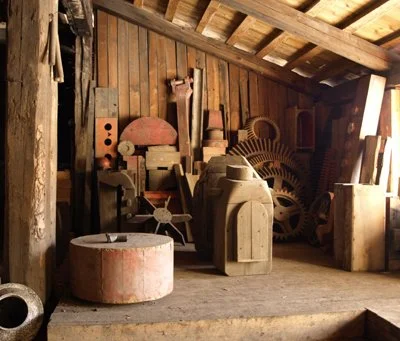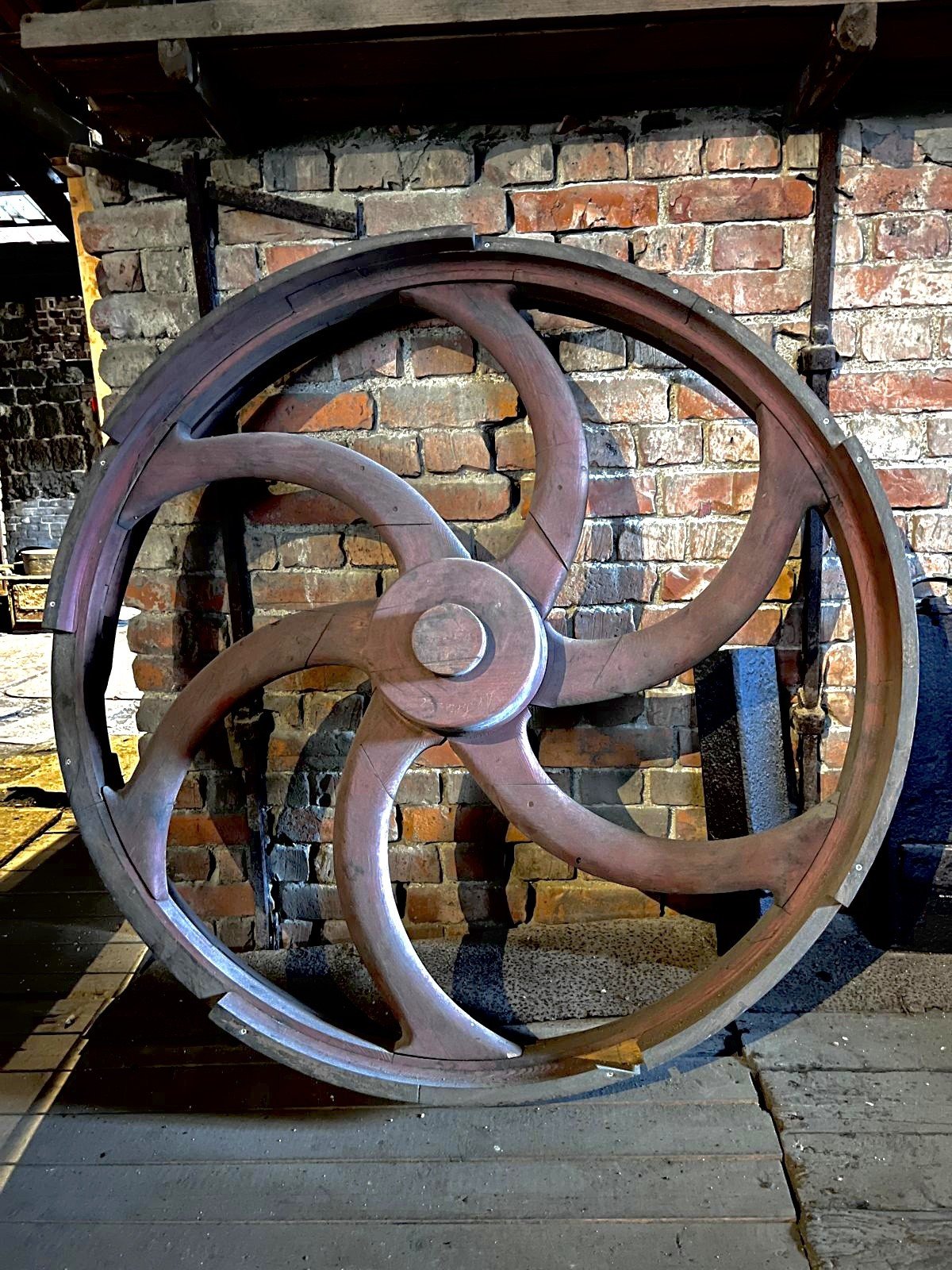
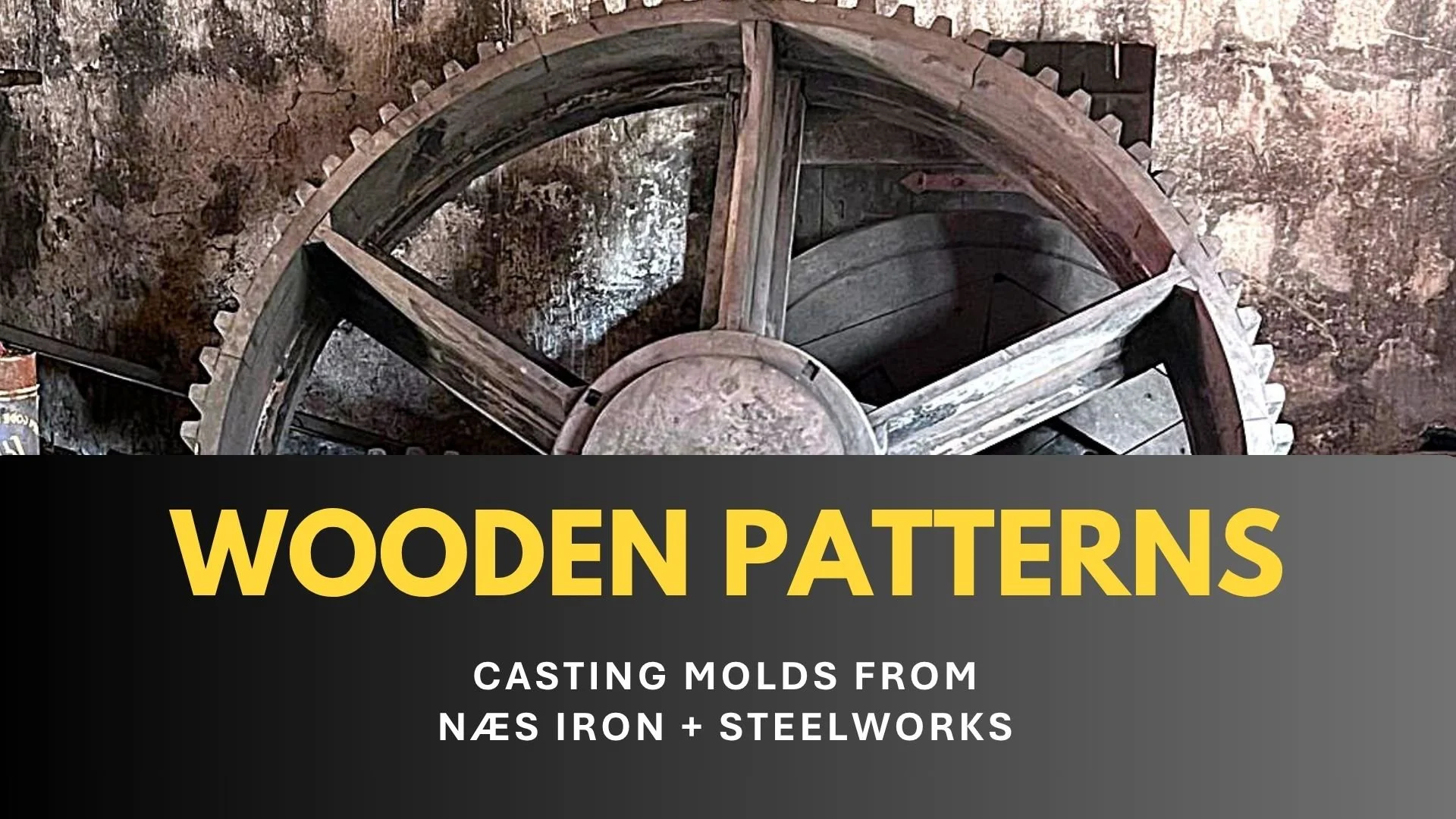
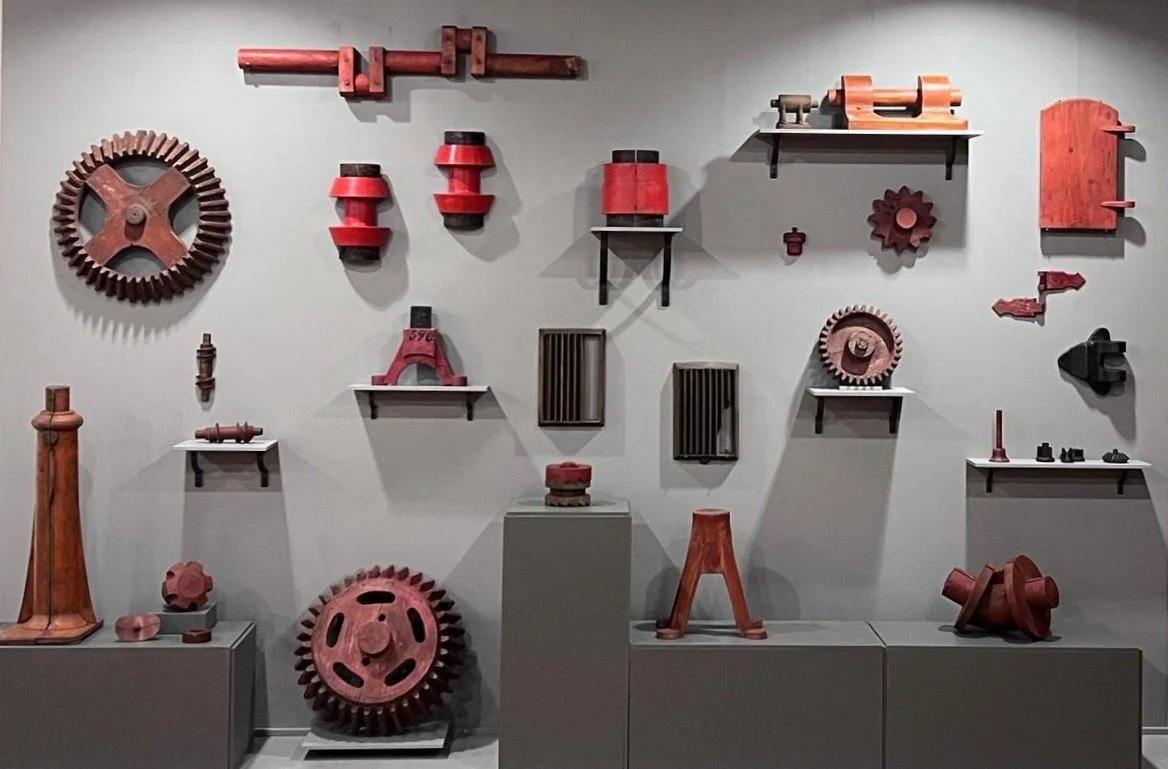
This year's exhibition highlights a less visible but absolutely essential part of an ironwork’s operations—the wooden patterns used for sand casting. At Næs Iron and Steelworks, there was a focus on high quality wrought iron, special steel alloys, and castings. For the latter, wooden models were of the utmost importance.
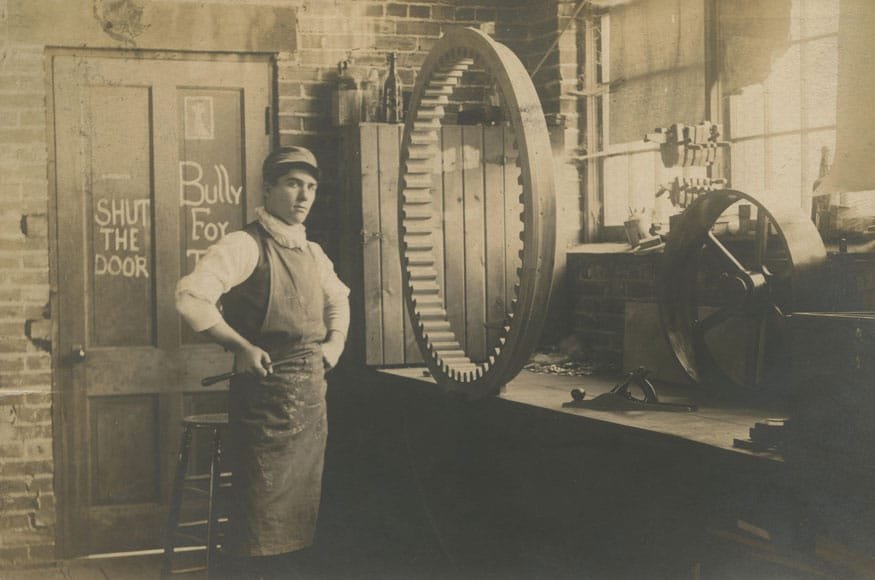
Most Norwegian ironworks and foundries needed a dedicated workshop to create casting patterns. Although there is little information to be found about the model-makers who worked at Næs, it is clear they were skilled and knowledgeable craftspeople. The various wooden models that remain at the works are a testament to their consummate proficiency.
Within industrial production facilities like the one at Næs, patterns typically had a long lifespan and were used repeatedly. It was therefore essential to the efficacy of the foundry that they be properly stored and remain readily accessible for the next production run. Over time, depending on the variety of castings that any given facility might do, such pattern “libraries” could eventually occupy a considerable amount of space, especially as the patterns’ survival depended on protection from temperature fluctuations and adequate air flow as both damp and extreme dryness are detrimental to the wood.
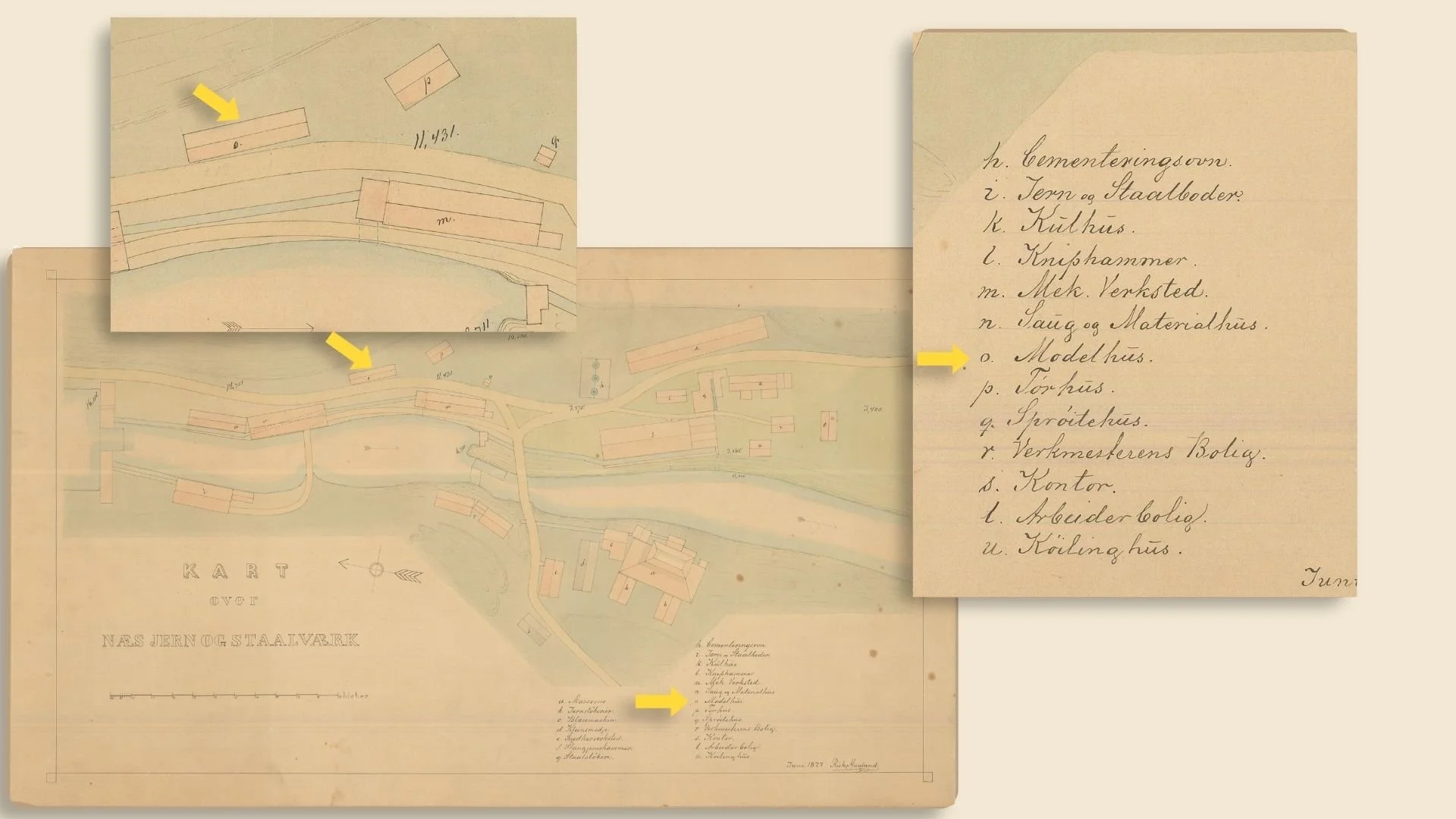
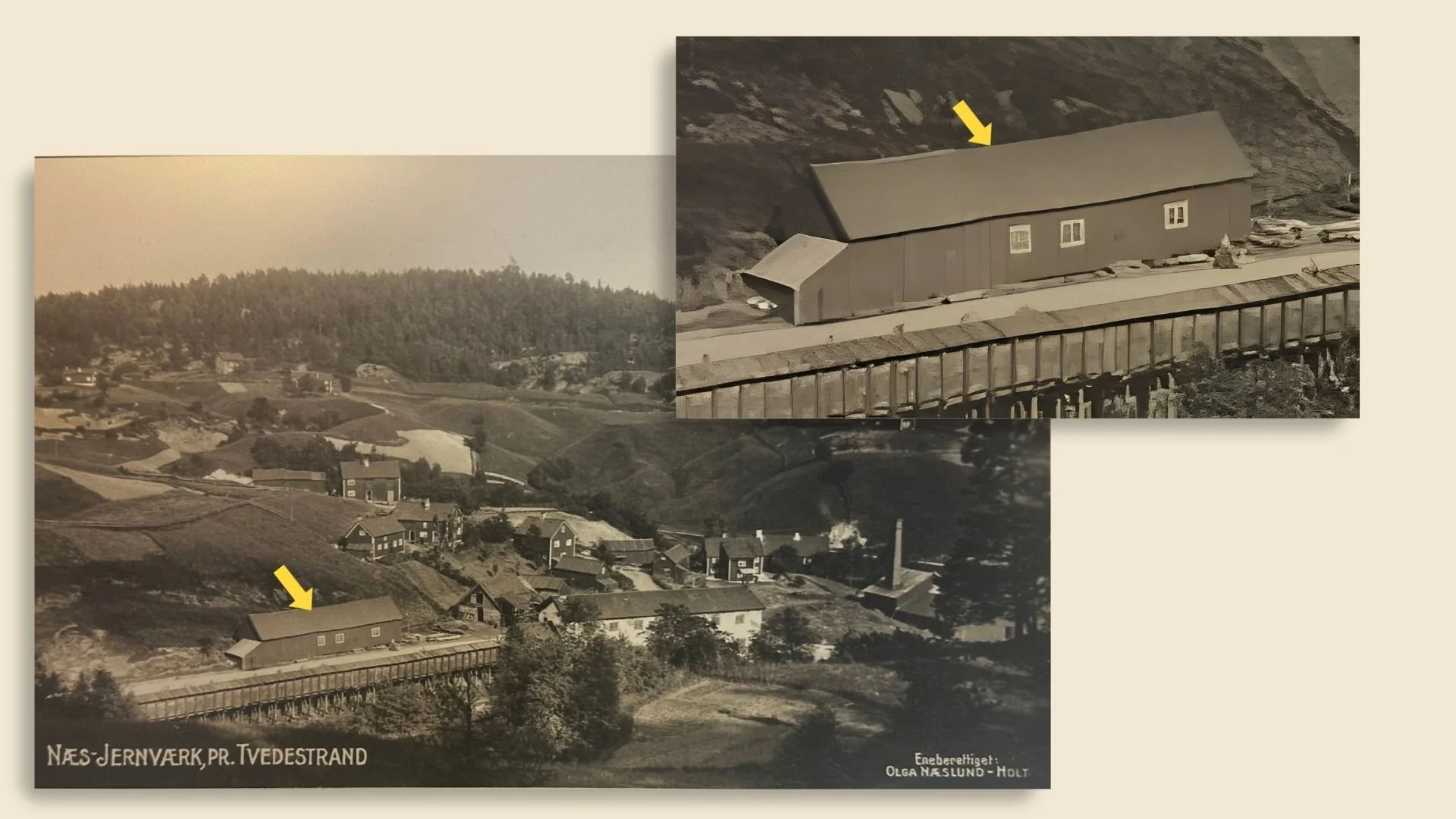
Despite Næs still having hundreds of patterns in its collection, what remains is most likely only a fraction of what the ironworks once had in its pattern library. On the map of the ironworks dating from 1877, there is a building labelled modelhus (bldg. O) suggesting that storage was needed for a significant number of patterns. Historically, these wooden patterns have had little value beyond their immediate use in production, which is why most have been lost from the various ironworks both here in Norway and abroad.
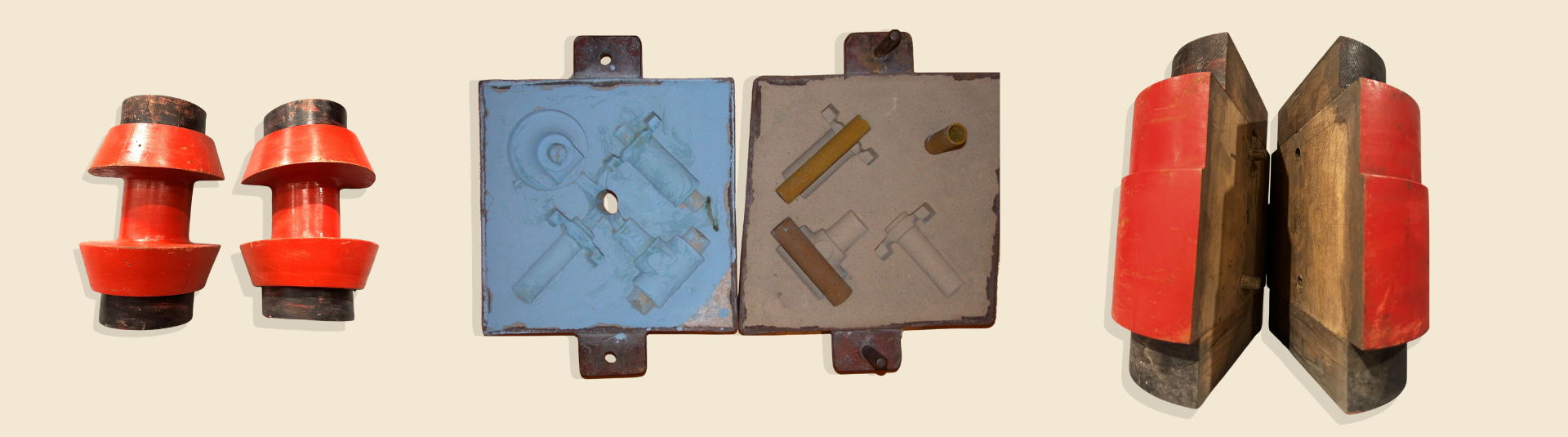
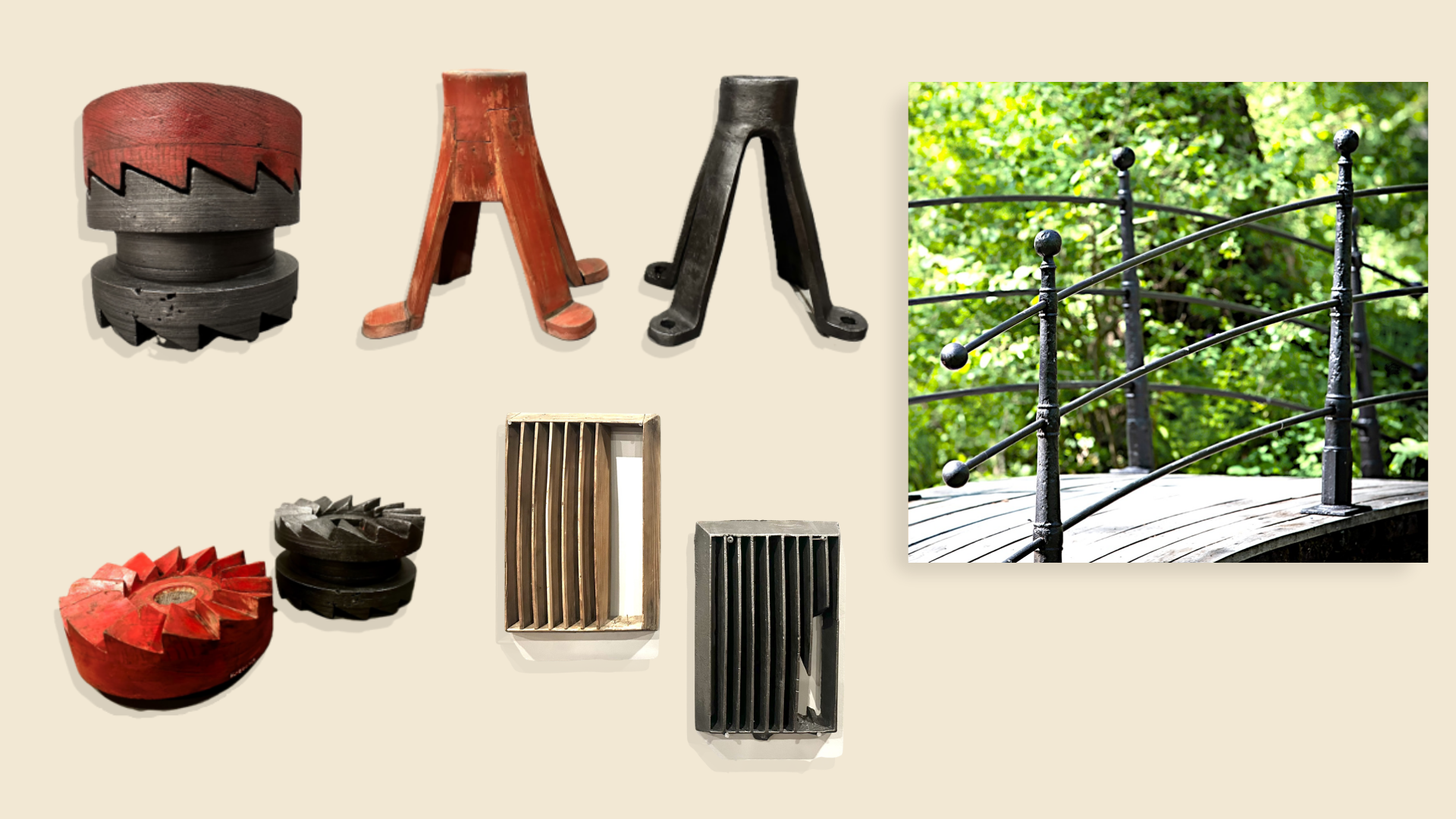
A wooden model is an exact copy of the desired object to be cast. The model is pressed into molding sand to create an impression into which molten metal is poured. The metal hardens in the mold to give the desired shape. At Næs, casting took place both in open and closed molds, and many of the earliest woodstove plates were cast in open forms set directly on the floor near where the molten pig iron was tapped from the blast furnace. The wooden models shown here are for casting in closed molds, where the wooden model is used to create a cavity in packed sand, usually in split or match plate patterns.
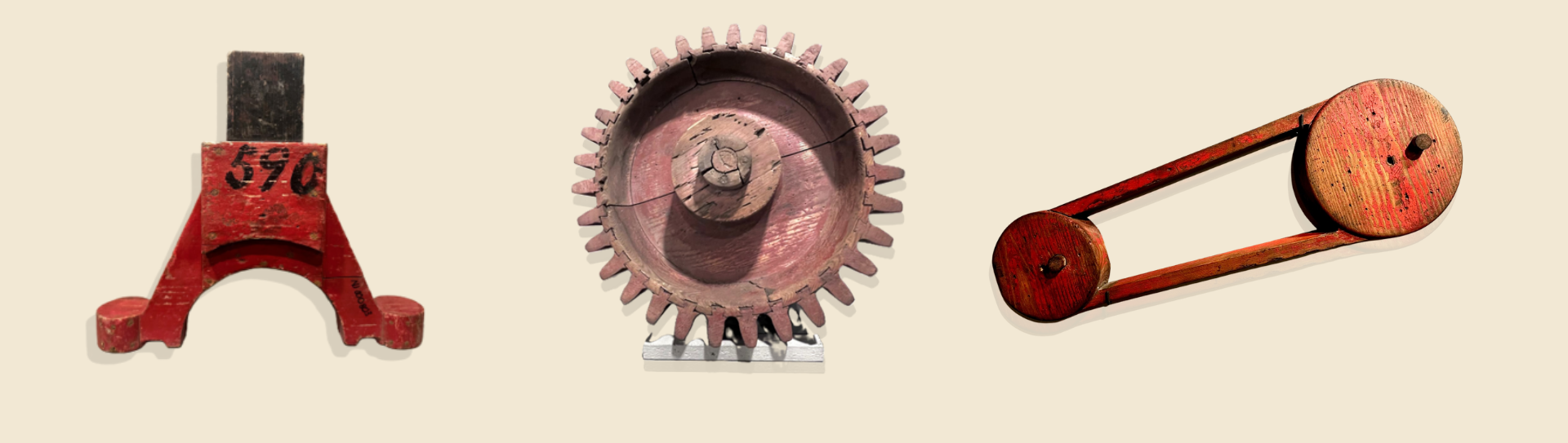
Some of the wooden models are simple yet elegant in shape, while others are built up from many individual pieces which must fit perfectly together to create the correct shape. Precise measurements are critical—a millimeter or two off, and the part to be cast from the pattern will not function as intended. Patterns must be made to exacting standards, taking into account the contraction of metal as it cools; thus, patterns are scaled up to account for the shrinkage that occurs. On average the linear shrinkage for cast iron is about 1%, while steel varies from 1.5% to as much as 2.8% depending on alloy. Because sand casting often yields an irregular surface, the patternmaker must also take into consideration a machining allowance for surface refinement after cooling. These wooden models therefore had to be created by skilled craftspeople who had a great of knowledge about engineering, mathematics, machining, and handcraft, but needed also to understand thoroughly the properties of both wood and metal, for example shrink allowance or “patternmaker’s shrink,” as well as degassing and the effect of cooling rates.
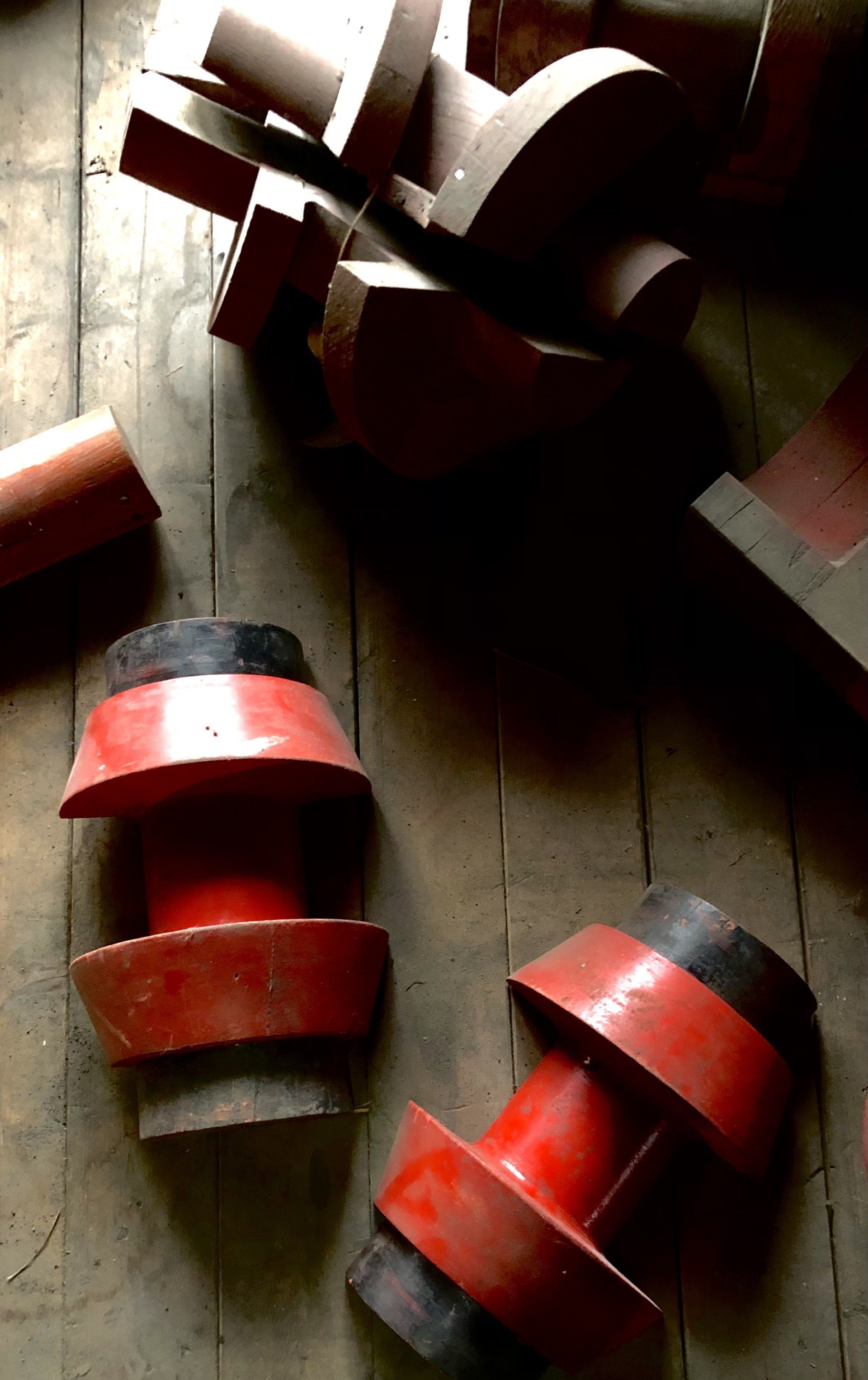
The colors on the wooden models are a code for completion—red means as cast, without further processing, yellow signals surfaces that are to be machined, and black denotes cavities in the cast metal. The differences in the red color on the exhibited wooden models are indicative of the various time periods the patterns were constructed.
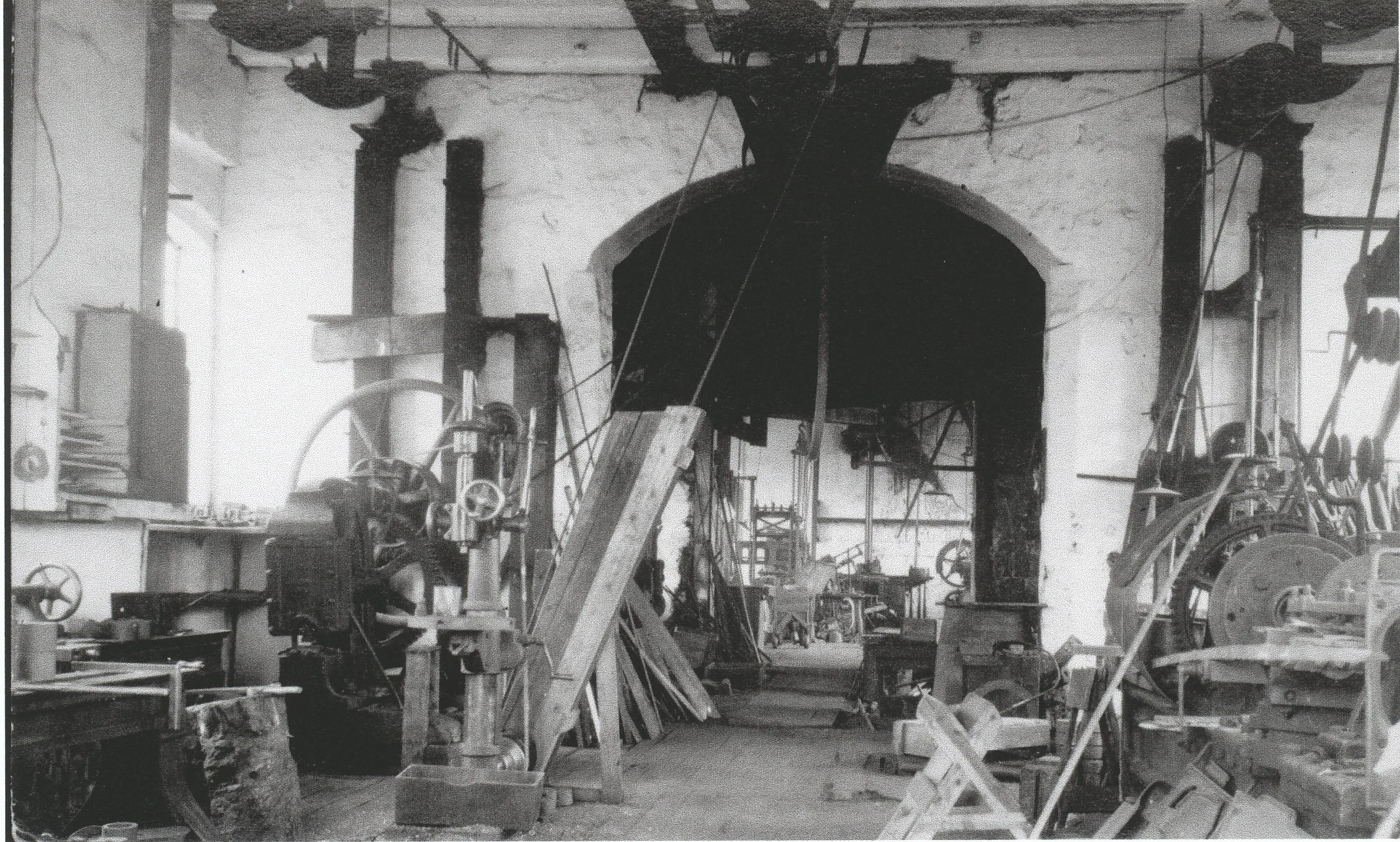
At Næs, there are still hundreds of wooden models for cast parts used in infrastructure, industrial machines, architectural elements, building components, hand tools, and more. Castings from these wooden models can be seen in all the buildings at Næs, including in the Snekkerboden, where the remains of a drive shaft still hang from the ceiling with parts recognizable from the objects in the exhibition. In Maskinen, or the machine shop, one of Norway’s earliest machine workshops, one can see another belt-drive axle as well as cogs and gearwheels cast from similar patterns to the ones on display in the exhibition. One can also see a variety of other industrial elements, both inside the different buildings and on the grounds that would have been cast from similar patterns to the ones on view. In the romantic landscape park Lunden, visitors can also see the Ovalbrua, or curved bridge, which has posts cast from the wooden pattern displayed. It is evident from the variations of the wooden models in the exhibition how important ironworks and foundries were to the development of Norwegian industry.
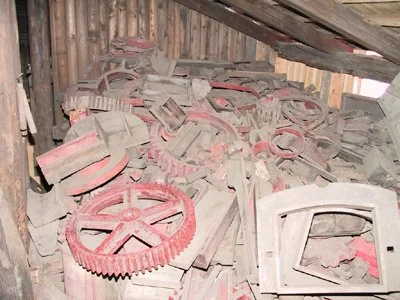
Many of the wooden models, along with various cast parts, were left in the crucible steelworks, or Digelstålverk, when Næs Iron + Steelworks closed after the great flood on November 13th, 1959. The crucible steelworks at Næs was established already in the 1860s with knowledge brought in from England, and here high-quality steel was produced in crucibles—clay pots with lids. Næs became well-known for its steel of excellent quality, which was cast into bars that were then either forged or rolled into bar stock or cast into machine parts or other finished products.
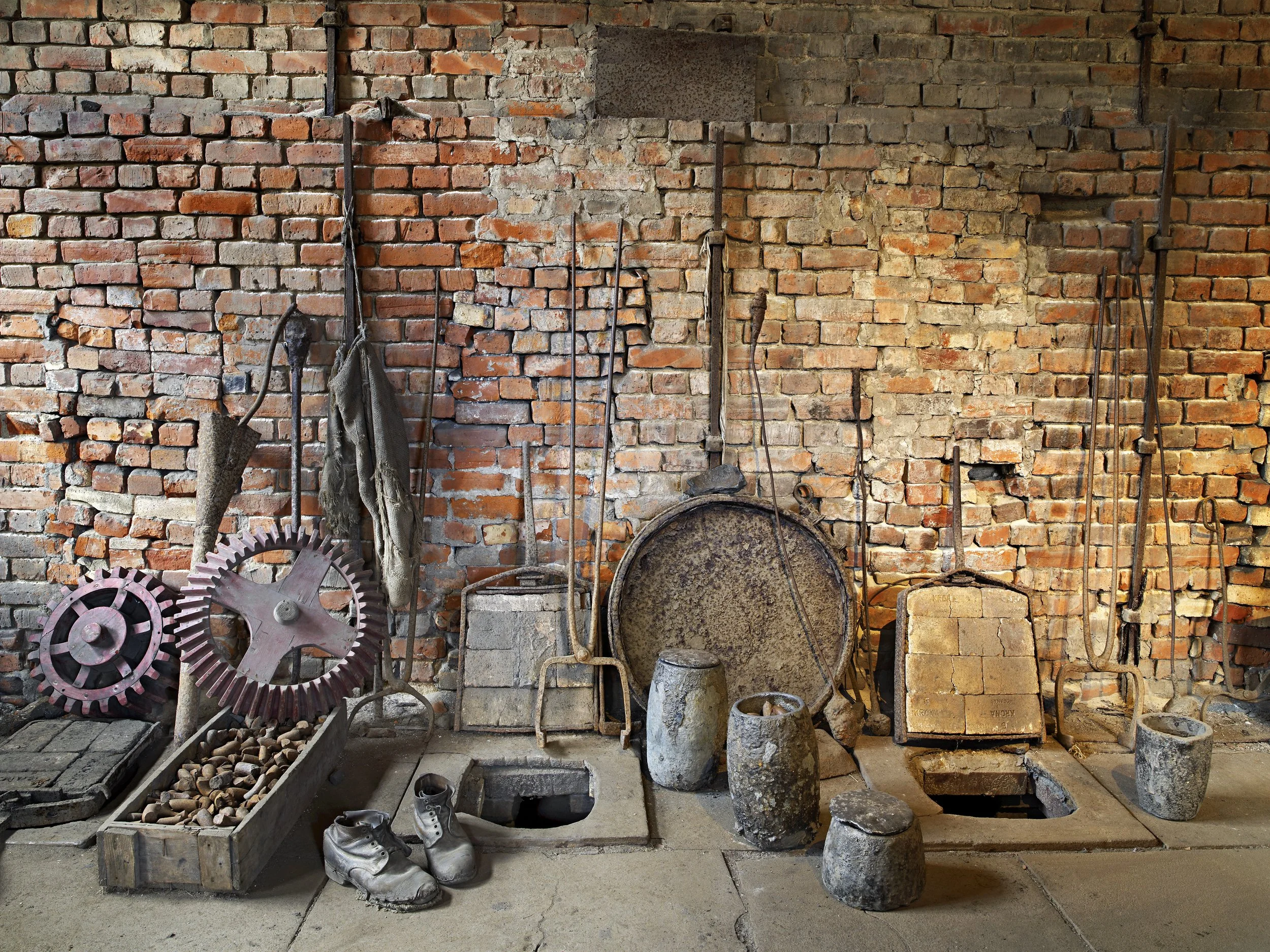
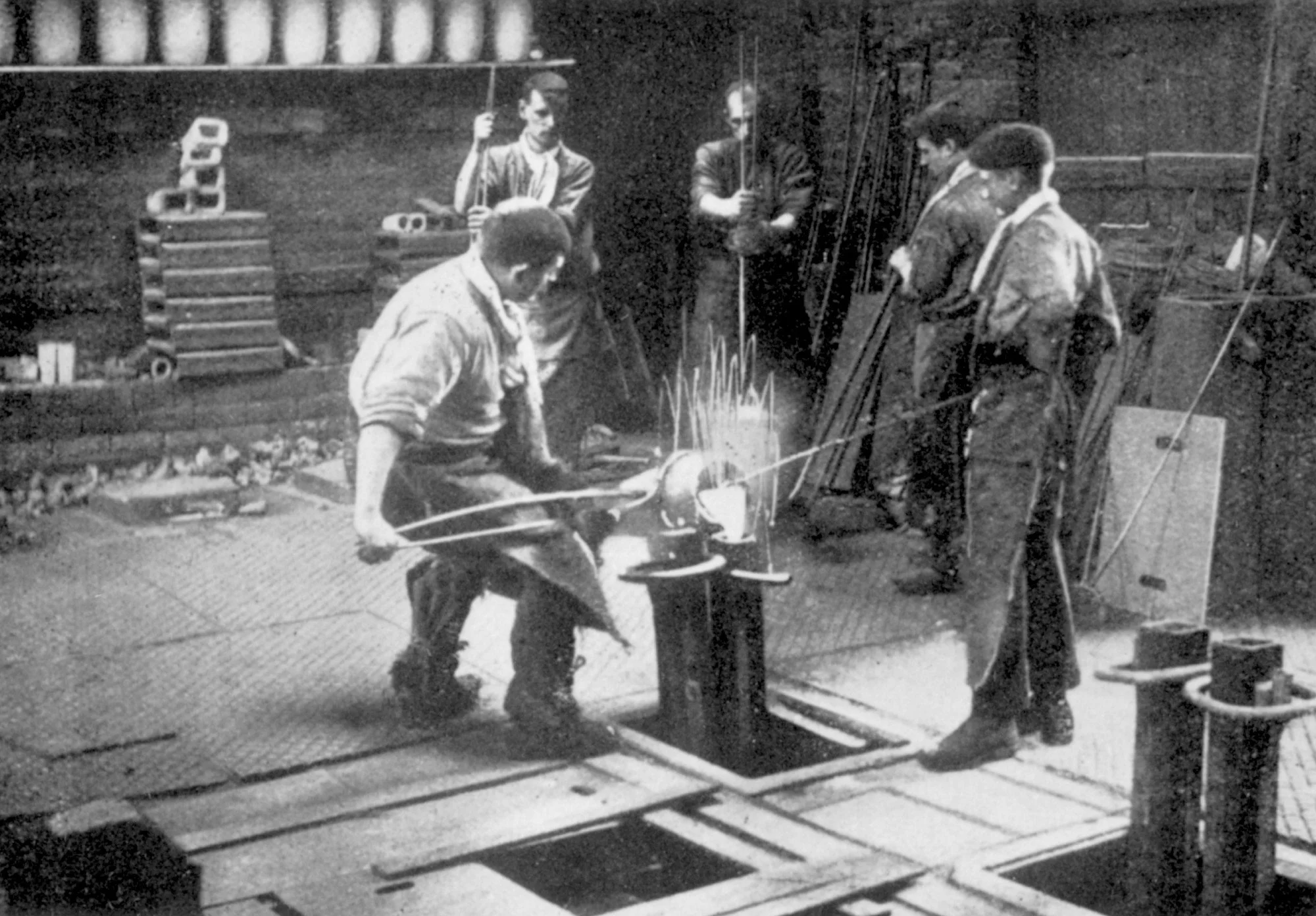
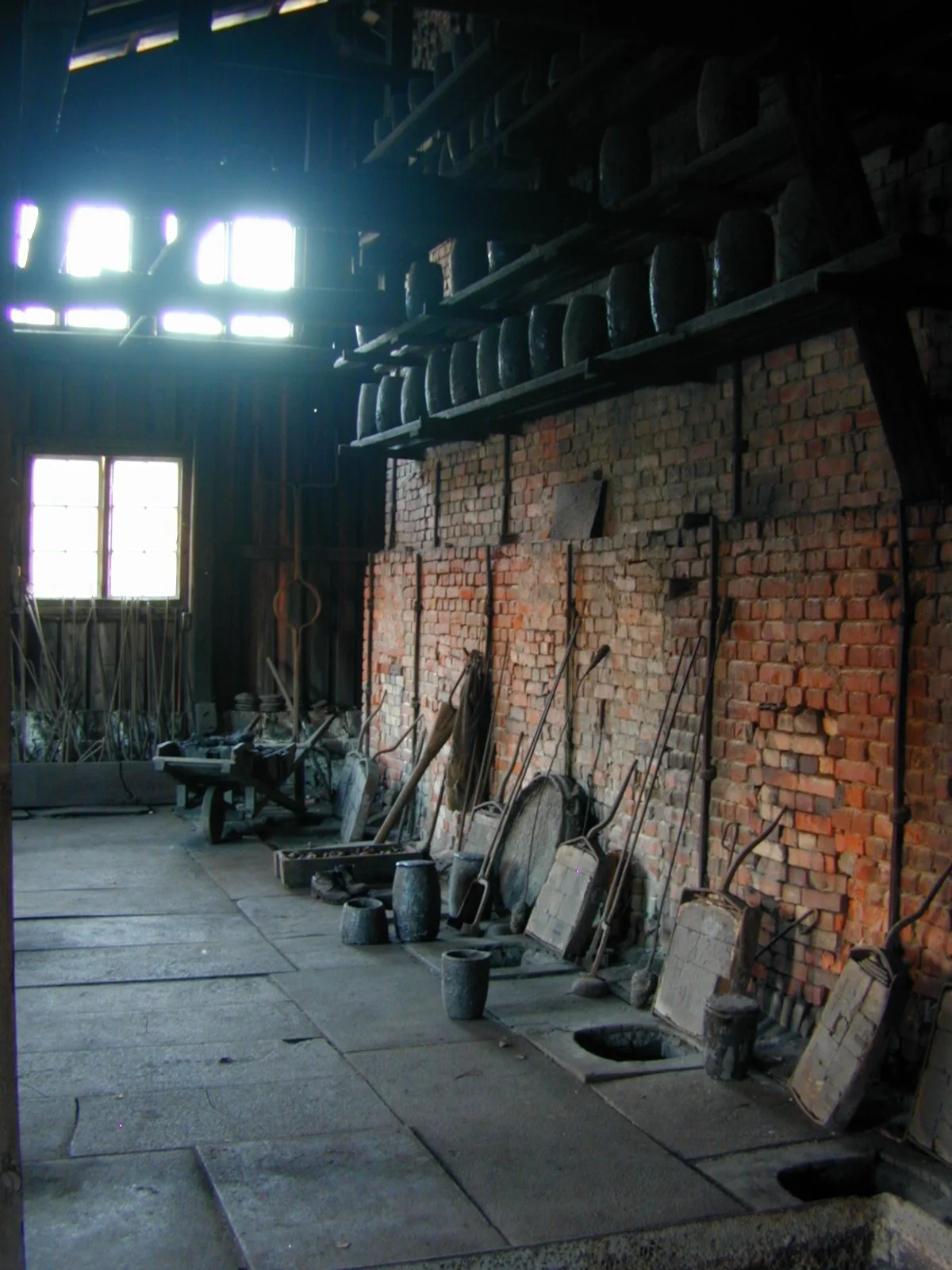
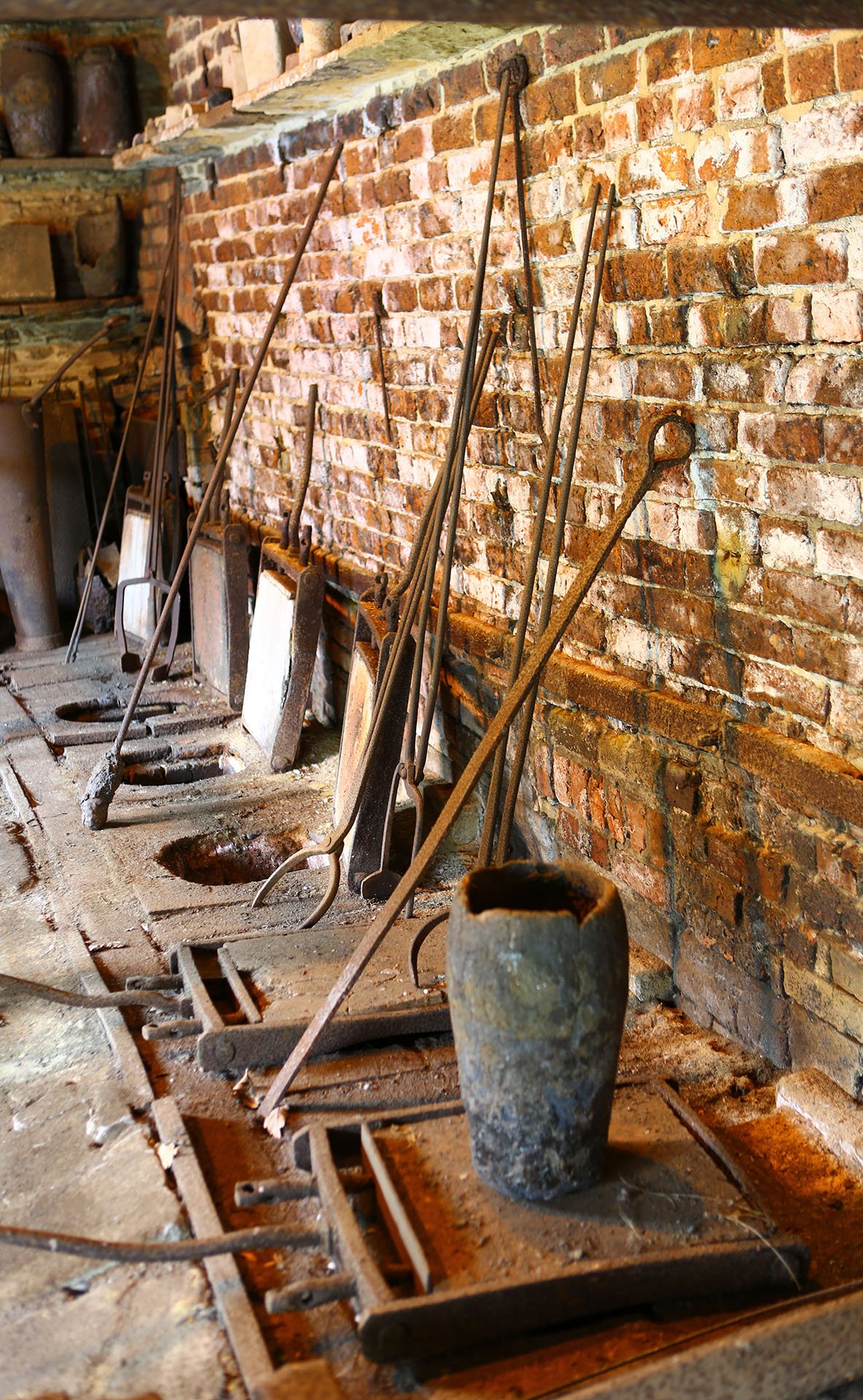
Today, only two complete crucible steelworks have been preserved as cultural heritage sites—the one at Næs and the other in Sheffield, England. At the Digelstålverk at Næs, many wooden models can still be seen lying around, as well as some of the objects cast from these sometimes simple, sometimes intricate, and always important wooden patterns. The prevalence of industrial parts one encounters both here at Næs and in other contexts testifies both to the ubiquity and the significance wooden models for casting created by skilled if anonymous craftsmen at the ironworks when it was in operation from 1665 to 1959.
Bilde t.v: Digelstålverket, Næs. Bildet t.h: Digelstålverket, Abbeydale, Sheffield, UK. Foto: Ian M. Spooner